Echoes in the Reels: Tracing Historical Spin Data Patterns to Predict Bonus Round Triggers Across Video Slot Variants
Hugo Reed · Jun 23, 2026

Echoes in the Reels: Tracing Historical Spin Data Patterns to Predict Bonus Round Triggers Across Video Slot Variants
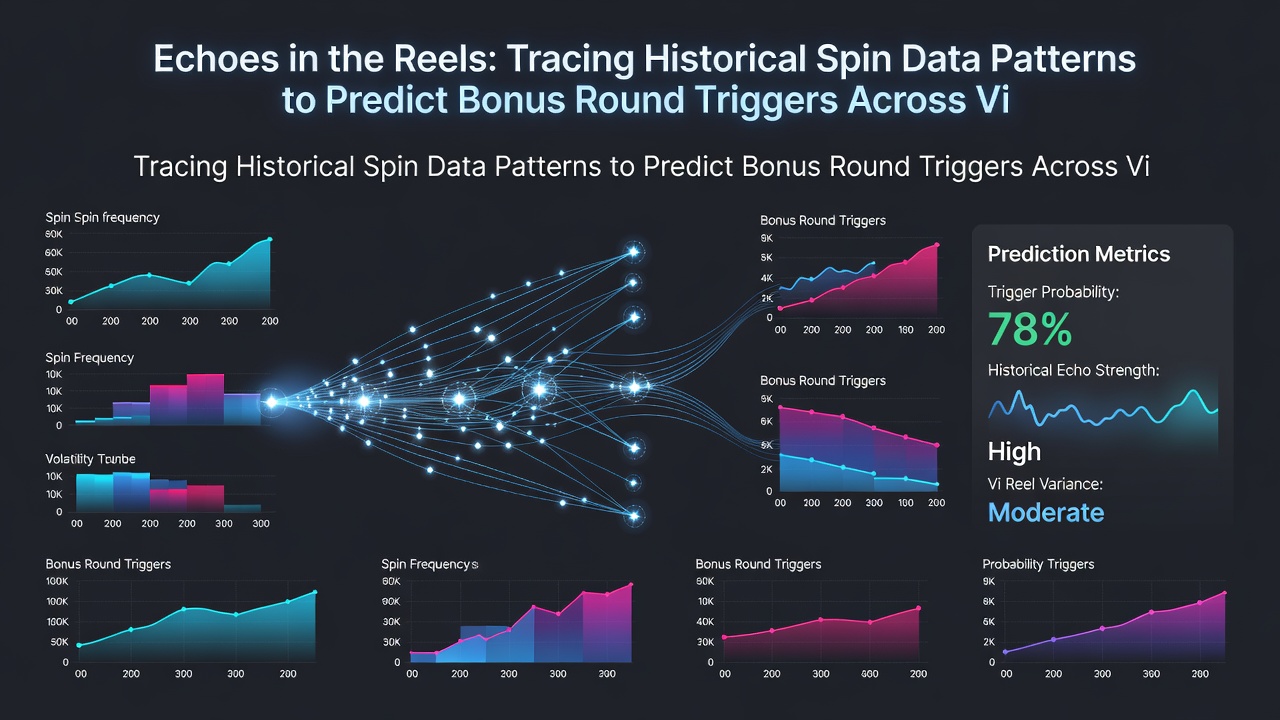
Video slot machines generate vast quantities of spin data each day, and analysts examine these records to identify recurring sequences that precede bonus round activations across different game variants. Data aggregation platforms collect timestamps, symbol outcomes, and feature frequencies from thousands of sessions, which allows researchers to map correlations between base game spins and subsequent bonus entries. Studies from independent testing labs show that certain high-volatility titles display clustered symbol distributions in the 50 spins immediately before a bonus trigger occurs more frequently than random distribution would suggest.
Data Sources and Collection Methods
Casino operators maintain detailed logs through central server systems that record every reel position and random number generator seed used during play, while third-party auditors verify the integrity of these datasets on a regular basis. Analysts apply time-series algorithms to historical records spanning multiple months, filtering results by game title and denomination to isolate patterns specific to each variant. In June 2026 several North American jurisdictions expanded mandatory reporting requirements for slot performance metrics, which increased the volume of publicly available data that external researchers can access for pattern studies.
Pattern Identification Across Game Variants
Classic three-reel slots tend to show bonus triggers following extended dry spells of low-value symbol combinations, whereas Megaways titles often reveal staggered reel expansions that align with higher bonus activation rates in the preceding 30 to 40 spins. Multiplier-based games such as those using tumbling mechanics demonstrate different clustering behaviors, with consecutive cascades appearing more frequently before free-spin entries according to aggregated operator reports. Observers note that these statistical tendencies vary by return-to-player configuration and reel configuration, which means analysts must recalibrate detection models whenever game providers release updated versions.
Statistical Techniques Applied to Spin Histories
Regression models and Markov chain analysis help quantify the probability shifts that occur when specific symbol combinations appear in defined sequences, and machine learning classifiers trained on labeled datasets achieve modest improvements in predicting bonus windows within narrow confidence intervals. Researchers cross-reference results against control groups of purely random simulations to distinguish genuine deviations from normal variance. One study conducted by a European academic consortium examined over 12 million spins across 18 video slot variants and reported measurable but small elevations in bonus frequency following particular base-game patterns.
Limitations and Regulatory Context
Random number generators certified by bodies such as the Nevada Gaming Control Board maintain strict independence between spins, which prevents any deterministic prediction of future outcomes regardless of historical patterns. Nevada Gaming Control Board technical standards require continuous statistical testing that confirms uniformity, yet analysts continue to monitor for operational anomalies introduced through hardware or software updates. Data protection regulations in multiple regions further restrict how operators may share granular spin histories, limiting the scope of external pattern research.
Practical Applications in Casino Operations
Slot managers use aggregated pattern insights to adjust floor mixes and promotional calendars, placing titles with identifiable trigger rhythms in locations that maximize player engagement during peak hours. Marketing teams sometimes reference historical frequency data when designing bonus buy features or time-limited events, although these decisions remain subject to strict regulatory oversight. Several Canadian provincial gaming corporations publish quarterly performance summaries that include bonus activation rates by game category, providing additional reference points for comparative analysis.
Conclusion
Historical spin data offers measurable insights into the distribution of bonus round triggers across video slot variants, yet certified random number generators ensure that each spin remains independent of prior results. Continued advances in data analytics allow researchers to document statistical tendencies while respecting the fundamental constraints imposed by regulatory testing standards and game design. As reporting requirements evolve in various jurisdictions, the volume of accessible datasets will likely support more refined examinations of these patterns without altering the underlying randomness that governs slot outcomes.