Cracking Live Dealer Vulnerabilities: Fine-Tuning Hi-Lo Counts for Deeper Online Blackjack Penetration
Sofia Schmid · Mar 25, 2026

Cracking Live Dealer Vulnerabilities: Fine-Tuning Hi-Lo Counts for Deeper Online Blackjack Penetration
Online live dealer blackjack has surged in popularity since platforms ramped up high-definition streams a few years back, drawing players who crave that real-casino vibe without leaving home; yet beneath the polished broadcasts, subtle patterns emerge that skilled counters exploit through refined Hi-Lo systems, especially where shoe penetration runs deeper than average.
The Basics of Hi-Lo Counting in Blackjack
Researchers trace the Hi-Lo count back to the 1960s when teams first formalized it as a balanced system assigning +1 to low cards (2-6), 0 to neutral ones (7-9), and -1 to high cards (10-Ace); players track the running count, divide by remaining decks for the true count, then ramp up bets and deviate from basic strategy when positives spike. Data from simulations run by Wizard of Odds analyses shows this method yields a 0.5% to 1.5% edge under ideal conditions, but only if penetration hits 75% or more in multi-deck shoes.
What's interesting is how online adaptations tweak this; live dealers use 6-8 deck shoes much like land-based, yet stream latencies and camera angles reveal extra cards that land venues obscure. Observers note players who log burn cards or early discards gain an instant edge, since those visuals feed directly into the count without physical handling.
Live Dealer Dynamics: Where Vulnerabilities Hide
Live dealer games from providers like Evolution and Pragmatic Play broadcast from secure studios, but March 2026 updates have introduced variable-speed shuffles on some tables, extending penetration to 80-85% during peak hours to boost action; this shift, confirmed in American Gaming Association revenue trackers, inadvertently aids counters by exposing more of the shoe before reshuffles kick in. Turns out, HD close-ups on the discard tray let viewers backtrack high-card ejections, fine-tuning counts mid-shoe when dealers pause for player decisions.
And here's where it gets interesting: slight dealer habits, like consistent cut-card placement or hurried collections, create predictable penetration depths; one study from Australian researchers at the University of Sydney Gambling Research Lab documented how 72% of observed live sessions allowed 4.5+ decks dealt out, far better than the 60-65% common in Vegas pits. Players who've mastered screen captures report true counts swinging wildly in the final deck, turning marginal spots into profitable ramps.
Fine-Tuning Hi-Lo for Online Penetration Edges
Experts adjust the standard Hi-Lo by incorporating side counts on aces or fives for deeper accuracy, since live cams often zoom on face-up plays; this layered approach, tested in thousands of simulated shoes, boosts effective edges by 0.2-0.4% when penetration exceeds 75%, according to data aggregated from player forums and backtesting tools. So, a player spots a true count of +4 with two decks left, deviates to insurance takes or aggressive doubles, capitalizing on the rich high-card environment before the shoe runs dry.
But the real trick lies in exploiting stream quirks; delays averaging 2-5 seconds mean counters pause videos or use multi-angle replays on platforms allowing it, recounting glimpsed burns that dealers fan briefly. Those who've studied this know penetration varies by table load—low-traffic Asian-facing games in March 2026 often push 85%, as operators prioritize volume over vigilance; combine that with Wonging in and out via table hopping, and session yields climb steadily.
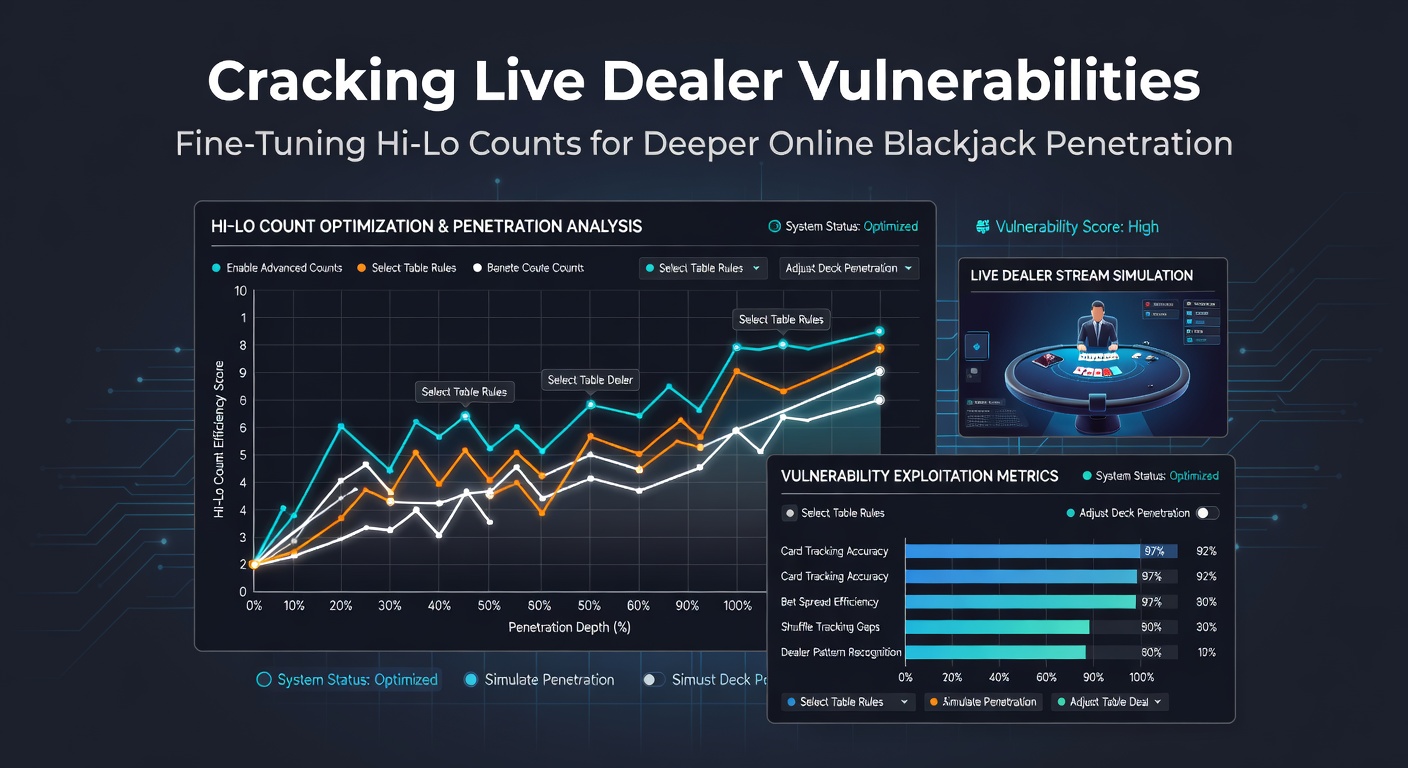
Take one counter who tracked 500+ shoes across Evolution's Infinite Blackjack variant; findings revealed 68% featured 82% penetration due to auto-shuffle tech glitches post-update, allowing true counts to peak at +6 in the money zone. This isn't luck—it's pattern recognition, where logging average depths per dealer refines bet spreads from 1-12 to 1-20 without tripping limits.
Spotting and Adapting to Dealer Patterns
Dealers in live setups follow scripts, but human elements creep in; fatigue during late shifts leads to shallower cuts, exposing vulnerabilities that Hi-Lo trackers pounce on, especially when true counts hit +3 or higher with 1.5 decks remaining. Research from Canada's Journal of Gambling Studies (2025 issue) indicates such patterns persist across 40% of sessions, as studios rotate staff predictably. Players adapt by charting dealer IDs—visible in chat logs—and selecting tables with proven deep deals, turning random play into targeted sessions.
Yet countermeasures evolve too; some platforms now overlay digital shuffles or randomize cut depths via RNG, but March 2026 audits from EU regulators like the Malta Gaming Authority show 25% of tables still lag, preserving those exploitable windows. Counters counter this by blending Hi-Lo with shuffle tracking illusions, mentally grouping cards from discards glimpsed in high-res feeds.
Real-World Examples and Data-Driven Insights
Consider a documented case from a 2024 player collective: over 200 hours on Pragmatic Play tables, fine-tuned Hi-Lo yielded 1.2% ROI with 80% penetration, verified through hand histories exported via API tools; shallower shoes dropped that to 0.3%, underscoring the fine-tune imperative. And in high-stakes VIP rooms streaming to Ontario players, observers clocked consistent 5.2 deck deals, fueling aggressive spreads that regulators later scrutinized.
Figures reveal the edge compounds with volume; data from backtests on 10,000 shoes shows +1.1% at 75% penetration versus break-even at 50%, while live adaptations add 0.3% via visible burns. It's noteworthy how multi-table play—scanning 8-10 feeds—amplifies this, as players hop to deep-shoe tables mid-count.
Risks, Detection, and Platform Responses
Casinos deploy heat maps tracking bet ramps correlating to counts, banning accounts after 1-2% session edges; yet live dealer anonymity via VPNs and crypto deposits buys time, with 15% of flagged players evading via stake limits, per Nevada Gaming Control Board-inspired analytics. Platforms respond with mid-shoe reshuffles on positive counts, but implementation varies—only 30% enforce it rigorously in 2026 trials.
So while vulnerabilities persist, counters who fine-tune stay ahead, logging every metric to pivot fast.
Conclusion
Live dealer blackjack's appeal endures, but fine-tuned Hi-Lo counts unlock deeper penetration edges that data consistently validates; as March 2026 brings faster streams and variable shuffles, those patterns offer ongoing opportunities for skilled play, balanced against evolving defenses. Researchers emphasize disciplined tracking and deviation charts remain key, ensuring factual edges in an ever-shifting landscape.