Coordinating Cluster Probabilities and Modifier Payouts in Networked Prize Accumulators for Digital Table Games
Sofia Reed · Nov 10, 2026

Coordinating Cluster Probabilities and Modifier Payouts in Networked Prize Accumulators for Digital Table Games
Digital table simulations rely on precise coordination between probability clusters and payout modifiers that operate across multiple prize accumulators linked through shared servers and real-time data feeds, and this coordination determines how simulated outcomes distribute rewards while maintaining consistent return-to-player ratios. Researchers have examined these systems in controlled environments to map how clusters of probability values interact with dynamic modifiers that adjust payout levels based on accumulator balances at any given moment.
Core Components of Probability Clusters in Simulated Environments
Probability clusters form when algorithms group random number sequences into segments that correspond to specific event outcomes on virtual tables, and these segments feed into accumulators that track pending prize values across games such as simulated roulette wheels and blackjack hands. Data from industry reports shows that synchronization occurs when software modules compare cluster outputs against current modifier values stored in central databases, which allows adjustments to occur within milliseconds of each simulated spin or deal. Observers note that this process prevents isolated accumulators from drifting into inconsistent states that could affect overall game integrity.
Interconnected prize accumulators store contributions from multiple game instances simultaneously, whereas each accumulator applies modifiers derived from aggregated cluster data rather than isolated calculations. Studies conducted by university research teams indicate that linkage protocols use timestamped synchronization packets to align cluster states across servers located in different geographic regions, and this alignment supports uniform behavior even when player volumes fluctuate rapidly.
Role of Payout Modifiers and Their Integration Points
Payout modifiers scale base rewards according to formulas that reference both current accumulator totals and recent cluster activity patterns, and integration points exist at the point where each simulated table outcome is finalized. Engineers design these modifiers to recalculate values whenever a new probability cluster completes its cycle, which ensures that larger accumulators influence smaller connected pools without creating feedback loops. Figures from technical reviews reveal that modifier application typically occurs after cluster validation steps to avoid premature adjustments that might alter expected distribution curves.
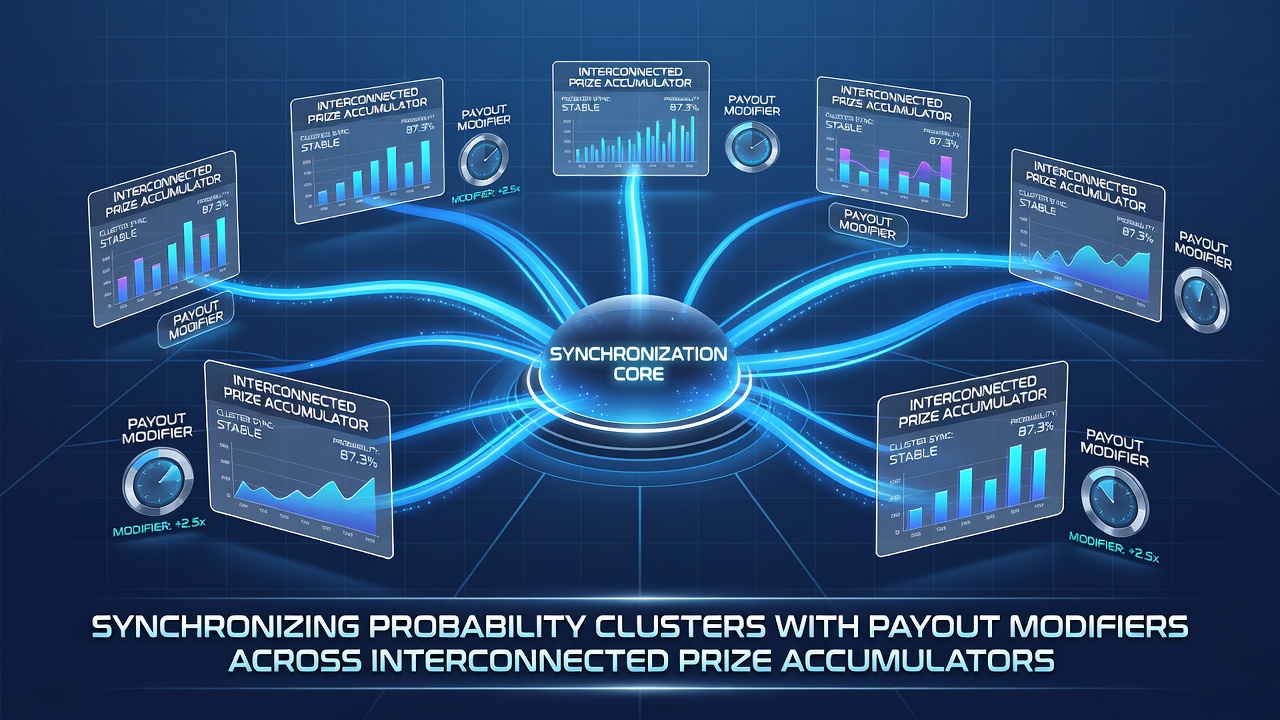
Networked systems transmit modifier updates through encrypted channels that also carry accumulator balance snapshots, and this dual transmission allows verification routines to confirm consistency before any payout is finalized on a player's interface. In November 2026, updated technical standards from several regulatory bodies are scheduled to require additional logging of these synchronization events to support audit trails that track every modifier change back to its originating probability cluster.
Technical Synchronization Methods Across Multiple Accumulators
Methods for synchronization include master-slave architectures where one primary accumulator broadcasts cluster summaries to secondary units, while peer-to-peer models distribute verification tasks across all connected nodes to reduce single-point latency. Research indicates that both approaches rely on consensus algorithms adapted from distributed computing to resolve discrepancies when cluster data arrives out of sequence. Those who've studied these implementations find that buffer mechanisms temporarily hold pending modifiers until all linked accumulators report matching states.
Simulation platforms incorporate error-correction routines that detect when a probability cluster fails to align with expected modifier parameters, and these routines trigger rollback procedures that restore prior accumulator values without interrupting active game sessions. Evidence from performance metrics collected over multi-month test periods demonstrates that such corrections occur infrequently when initial cluster definitions receive thorough calibration during system setup.
Regulatory and Technical Oversight Considerations
Regulatory frameworks in various jurisdictions require operators to submit documentation detailing how probability clusters interact with payout modifiers, and independent testing laboratories verify that interconnection protocols maintain mathematical fairness across all accumulators. Reports from the Nevada Gaming Control Board and similar agencies in other regions emphasize the need for transparent mapping of data flows so that external reviewers can replicate synchronization logic under controlled conditions. Academic papers published in gaming technology journals further outline best practices for logging cluster-modifier events to facilitate post-deployment analysis.
Industry organizations such as the European Gaming and Betting Association have compiled guidelines that address scalability when the number of interconnected accumulators increases, and these guidelines recommend modular designs that allow individual components to undergo updates without affecting the broader network. Data collected from operational platforms shows that modular approaches reduce downtime during maintenance windows scheduled for modifier recalibrations.
Conclusion
Coordinating probability clusters with payout modifiers across interconnected prize accumulators forms a foundational element of modern digital table simulations, and ongoing refinements in synchronization protocols continue to support stable operation as simulation volumes grow. Technical documentation and regulatory filings provide the primary sources for understanding these interactions, while scheduled standard updates in late 2026 are expected to introduce enhanced logging requirements that further strengthen verification processes.