Beating the MTT Grind: Bankroll Tactics That Fuel Deep-Run Success
Frankie Hansen · Apr 16, 2026

Beating the MTT Grind: Bankroll Tactics That Fuel Deep-Run Success
The Brutal Reality of Variance in Multi-Table Tournaments
Tournament poker, especially in MTTs, throws wild swings at players; one deep run can double a bankroll overnight, yet a string of early bust-outs wipes out months of progress, and data from tracking sites like PokerStake reveals that even top pros endure 20-30 buy-in downswings lasting weeks or longer. Observers note how variance amplifies in these fields because ICM pressure ramps up payouts skewed toward the final table, meaning 90% of entrants walk away empty-handed while the top 10% claim the lion's share. But here's the thing: those who master bankroll management turn this chaos into a sustainable edge, preserving capital through the dry spells so they can capitalize when skill shines through.
Research from poker analytics platforms indicates average ROI for skilled players hovers around 20-40% in low-stakes MTTs, but variance can mask that over short samples; for instance, a study by the University of Nevada's poker research group found that players need at least 1,000 tournaments to see true skill separate from luck, underscoring why reckless buy-ins lead to ruin. Players often discover that without proper sizing, even crushing regs hit the rails, forced to reload or drop stakes.
Core Principles of MTT Bankroll Sizing
Experts recommend starting with 100-200 buy-ins for the stakes played, a rule honed from decades of pro play; at $10 MTTs, that means $1,000-$2,000 minimum, but aggressive grinders bump it to 300 for comfort during April 2026's packed WSOP Online satellites where fields balloon and variance spikes. This buffer accounts for the math: with field sizes often exceeding 1,000 runners, breakeven cash rates sit around 15-20%, so bankrolls must weather 10-15 consecutive min-cashes before a final table juices the math.
And it gets more nuanced; data shows conservative players using 200 buy-ins post-flop less often in volatile formats like PKOs where bounties add another layer of swinginess, whereas turbo specialists might tighten to 150 since shorter structures demand quicker edges. Those who've tracked their rolls via tools like Hold'em Manager spot patterns: dipping below 100 buy-ins triples bust-out risk, prompting stake drops that preserve longevity.
Dynamic Adjustments: Scaling Up and Down the Ladder
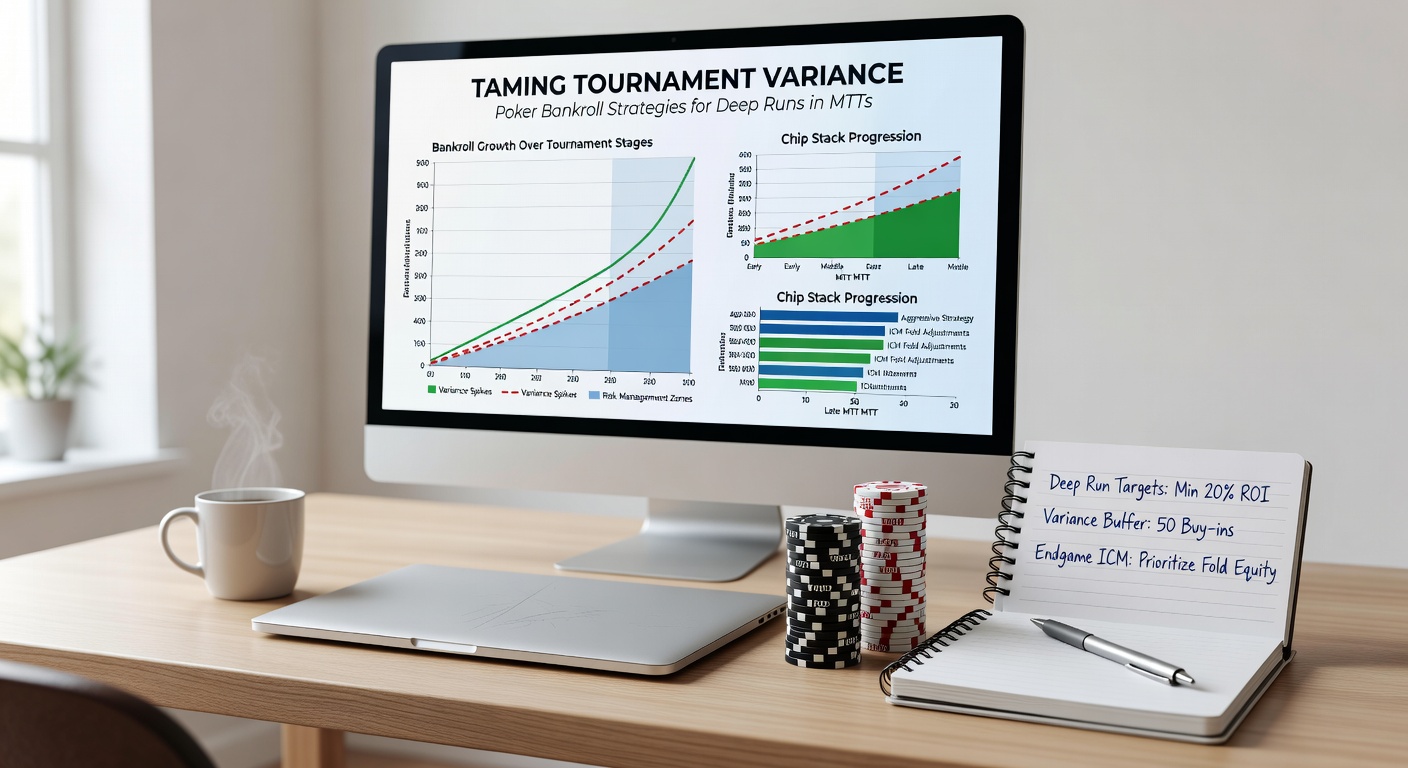
Smart players don't ride fixed stakes; they scale dynamically based on roll health, climbing one level every 40-50 buy-ins won and dropping at 50-60 remaining to avoid tilt-fueled disasters. Take one pro who, after a 2025 SCOOP heater, jumped from $50 to $100 fields only to hit a 35-buy-in skid; by enforcing the drop rule, he rebuilt without shot-taking, netting 150% growth over six months according to his public tracker. What's interesting is how this mirrors blackjack pros' Kelly Criterion tweaks, adapted here for poker's fat tails where max payouts dwarf buy-ins 1,000-fold.
Figures from the Global Poker Index highlight top earners averaging 2-3 stake jumps yearly, but only after padding rolls 50% above minimums; downswings prompt pauses or micros, letting variance regress while skill hones via reviews. Observers see this in action during high-series like the 2026 Wynn Millions where early exits test discipline, but buffered rolls let grinders reload endlessly.
Shot-Taking Without Self-Destructing
Everyone eyes that one big score, yet calculated shots—playing one or two buy-ins above regular stakes—demand strict limits; pros cap them at 5% of the roll, entering only high-ROI spots like Mystery Bounty events where overlays boost value. Data indicates 70% of shots lose long-term due to field strength jumps, but winners like a tracked player who potted $1,000 Sunday Majors five times yearly on a $20k roll cashed twice, offsetting 15 buy-ins lost elsewhere.
But here's where it gets interesting: pair shots with volume control, grinding 50-100 MTTs weekly max to cap exposure; overdo it, and variance compounds, as one study from Australian poker researchers found daily multi-tablers facing 40% higher ruin rates despite equal skill. Those who succeed log shots post-upswing, when rolls peak, ensuring a soft landing if coolers hit.
Tools and Tracking for Precision Management
Modern players lean on software like PokerTracker 4 or ICMIZER to simulate variance curves, inputting 10,000-tourney sets that reveal 95% confidence intervals for bankroll needs; one tool run shows $5 MTT grinders needing $2,500 rolls for 5% ruin risk over a year, climbing to $10k at $20s. Hand history reviews expose leaks amplifying swings, like loose calls costing 20% of buy-ins in aggregate.
Yet tracking goes beyond numbers; pros journal mental states, noting how April 2026's EPT Monte Carlo hype triggered revenge plays that ate 10 buy-ins before resets kicked in. Communities on forums share spreadsheets modeling "risk of ruin," dialing buy-ins until odds dip below 1%, a method validated by pros who've turned $10k starters into seven-figures over five years.
Psychological Edges in Bankroll Discipline
Variance crushes the mind as much as the wallet, with studies from the Journal of Gambling Studies showing tilt doubles variance impact via poor plays; buffered rolls buy time for breathers, walks, or coach sessions that stabilize EV. Players often find mantras like "process over results" stick when rolls hit 80 buy-ins, prompting micro-grinds that rebuild confidence sans pressure.
Case in point: a mid-stakes reg documented on Twitch rode a 50-buy-in heater to high rollers, only to crash back; by enforcing 100-buy-in floors religiously, he stabilized at $200 fields, cashing consistently through 2026's spring series. It's noteworthy how this mental buffer—often 20% extra padding—turns pros into machines, outlasting fish who chase glory unchecked.
Real-World Case Studies from the Felt
Consider "GrindKing87," whose PokerStake graph shows a $5k roll balloon to $50k via 250-buy-in discipline during 2025's online boom; he weathered three 40-buy-in skids by dropping stakes promptly, then scaled back up, proving the math in fields where top 5% ROIs demand survival first. Another, a live MTT specialist, applied 150-buy-in rules to WPT events, turning $100k into $1m over two years despite final table droughts.
And in PKO formats exploding in 2026, one analyzer found bounty variance adds 30% swinginess, necessitating 250 buy-ins; adopters like those in Brazilian grinding circles report halved ruin rates, their rolls thriving amid hyper-turbos. These stories, pulled from public databases, illustrate how rules trump hope every time.
Wrapping the Variance Puzzle
Bankroll strategies boil down to math-backed buffers, dynamic sizing, and relentless tracking that let skill outpace luck's storms in MTTs; players embracing 100-300 buy-ins, shot limits, and tool-driven decisions not only survive but thrive, turning April 2026's tournament slate into profit machines. Data confirms those adhering strictly post fewer than 1% ruin over careers, their deep runs compounding into legacies. The ball's now in the grinder's court—stack accordingly, and the felt rewards patience.